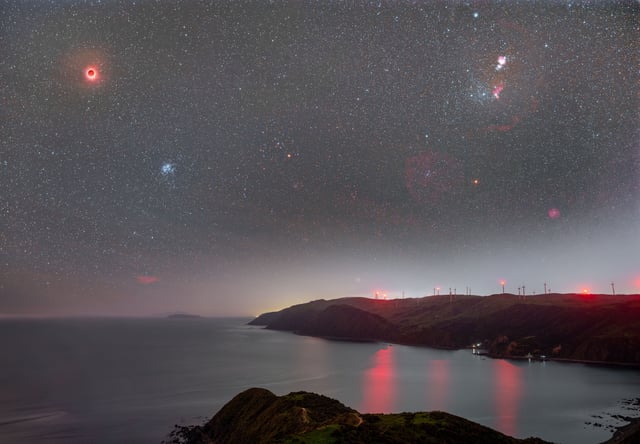
See New Zealand's Spectacular Blood Moon Timelapse Video
Imagine gazing up at the night sky as the familiar silver orb of our Moon slowly transforms. It doesn't disappear into shadow, but instead, takes on a mystical, fiery glow, shifting from brilliant white to a deep, mesmerizing coppery red. Such a breathtaking spectacle recently unfolded over New Zealand, captivating observers and astrophotographers alike. A rare total lunar eclipse bathed the Moon in a stunning crimson hue, giving rise to what we popularly call a Blood Moon. This unforgettable celestial performance was immortalized in an awe-inspiring timelapse video, offering a unique opportunity to relive the magic of this extraordinary event witnessed across the beautiful Aotearoa landscape.
The recent total lunar eclipse provided an unparalleled viewing experience, especially for those in New Zealand with clear skies. Thanks to the dedicated work of astrophotographer Josh Aoraki from the Te Whatu Stardome in Auckland, the entire progression of this rare celestial event has been expertly condensed into a captivating video, allowing viewers worldwide to appreciate the Moon's dramatic transformation. This visual testament not only showcases the sheer beauty of the cosmos but also highlights the skill and patience required to capture such a fleeting natural wonder.
Witnessing the Celestial Spectacle: A Blood Moon in New Zealand
New Zealand, with its relatively low light pollution in many areas and its position in the Southern Hemisphere, often provides a privileged vantage point for astronomical events. The recent total lunar eclipse was no exception, offering a magnificent display for countless stargazers across the country. A blood moon isn't just any lunar phase; it's a specific, awe-inspiring phenomenon that occurs during a total lunar eclipse. During this event, the Earth positions itself directly between the Sun and the Moon, casting a full shadow. However, the Moon doesn't vanish entirely. Instead, a reddish light filters through Earth's atmosphere, illuminating the Moon in shades of orange, red, and brown.
The rarity of a total lunar eclipse that results in such a vivid blood moon makes it a highly anticipated event. Factors like atmospheric conditions on Earth – including dust, clouds, and even volcanic ash – can influence the exact shade of red the Moon takes on. Observers in New Zealand were treated to a particularly striking display, a testament to the pristine conditions under which it was viewed. Such events offer more than just visual appeal; they connect us to the vastness of the universe and remind us of the intricate dance of celestial bodies. For more on the grandeur of this event across the nation, you can read about how a
Rare Blood Moon Lunar Eclipse Graces New Zealand Skies.
The Art of Capturing a Blood Moon Timelapse: Josh Aoraki's Vision
The brilliance of capturing such a fleeting and majestic event lies in the hands of skilled astrophotographers. One such talent, Josh Aoraki, from the Te Whatu Stardome in Auckland, managed to produce an extraordinary timelapse video that distills hours of cosmic drama into just a few mesmerizing minutes. Creating a blood moon timelapse is no small feat; it requires meticulous planning, precise equipment, and a deep understanding of both photography and astronomy.
Here’s a glimpse into the process and what it takes to achieve such a stunning result:
- Strategic Planning: Astrophotographers must know the exact timing of the eclipse, its trajectory, and local weather conditions. Clear skies are paramount, and predicting them accurately is crucial.
- Specialized Equipment: High-quality DSLR or mirrorless cameras with good low-light performance are essential. A sturdy tripod is non-negotiable for stability during long exposures, and an intervalometer is used to automatically trigger shots at set intervals over several hours. Telephoto lenses are often employed to bring the Moon's details into sharp focus.
- Precise Settings: Capturing the subtle changes in light and color requires constant adjustments to exposure, ISO, and aperture. As the Moon darkens during the eclipse, exposure times need to be increased, and ISO settings adjusted to prevent underexposure while managing noise.
- Post-Processing Mastery: Thousands of individual frames are typically captured. These frames are then carefully processed, aligned, and stitched together using specialized software to create a smooth, continuous video. Color correction and noise reduction are critical steps to produce a high-quality final product.
Josh Aoraki’s blood moon new zealand timelapse isn't just a record of an event; it's an artistic interpretation that allows us to perceive time and celestial motion in a way our eyes alone cannot. His work from the Te Whatu Stardome has become an invaluable visual document of this rare occurrence, inspiring many to look up and appreciate the wonders above. To learn more about his specific capture, delve into
Auckland's Rare Blood Moon Captured by Josh Aoraki.
Decoding the Magic: What Makes a Blood Moon Red?
The science behind the blood moon's striking red color is a fascinating interplay of light and Earth’s atmosphere. When a total lunar eclipse occurs, the Earth positions itself directly between the Sun and the Moon. Ordinarily, this would simply block all direct sunlight from reaching the Moon. However, our planet's atmosphere plays a crucial, beautiful role.
Here's how it works:
- Scattering of Light: Sunlight is composed of all colors of the rainbow. When sunlight enters Earth’s atmosphere, blue and violet light waves are scattered more efficiently by the tiny gas molecules (like nitrogen and oxygen) than red and orange light waves. This phenomenon is known as Rayleigh scattering – the same reason our sky appears blue during the day.
- Filtering Effect: As most of the blue light is scattered away, what's left are the longer wavelength red and orange light waves. These redder light waves are less scattered by the atmosphere and can bend or refract around the edges of the Earth.
- Illuminating the Moon: This refracted red light travels through Earth's atmosphere and is cast onto the surface of the Moon, bathing it in a soft, eerie glow. The more dust or clouds there are in Earth's atmosphere at the time of the eclipse, the more intensely red the Moon will appear, as more blue light is scattered away.
Think of it like a global sunset or sunrise, but projected onto the Moon. All the sunsets and sunrises happening around the world at the time of the eclipse are collectively illuminating the Moon, tinting it with those familiar fiery hues. The appearance of a blood moon new zealand is therefore a profound reminder of our planet's atmospheric properties and its role in creating such a captivating celestial spectacle.
New Zealand: A Haven for Stargazers and Astrophotographers
Beyond the recent blood moon, New Zealand has long been recognized globally as an exceptional destination for stargazing. The country boasts some of the clearest, darkest skies on Earth, largely due to its remote location and committed efforts to reduce light pollution. This makes it an ideal location not only for casual stargazers but also for professional astronomers and astrophotographers seeking to capture stunning images of the cosmos.
One of New Zealand's crown jewels for astronomy is the Aoraki Mackenzie International Dark Sky Reserve, located in the South Island. This vast area, encompassing Aoraki/Mount Cook National Park and the Mackenzie Basin, is one of only 21 International Dark Sky Reserves in the world, designated for its exceptional quality of starry nights and nocturnal environment. Here, the Milky Way sprawls vividly across the sky, nebulae are visible to the naked eye, and celestial events like the blood moon are seen in their full, unadulterated glory.
The appreciation for the night sky runs deep in New Zealand's culture, particularly within Māori traditions. Māori astronomy, known as "Tātai Arorangi," is rich with knowledge about star constellations, their names, and their significance for navigation, planting cycles, and spiritual guidance. The Maramataka, the Māori lunar calendar, is a testament to this profound connection to celestial rhythms. This cultural heritage, combined with the country's unparalleled natural environment, solidifies New Zealand's status as a premier location for experiencing the wonders of the universe.
Conclusion
The spectacular blood moon witnessed over New Zealand, and so expertly captured in timelapse, serves as a powerful reminder of the profound beauty and mystery that lies beyond our immediate world. Josh Aoraki’s dedication at the Te Whatu Stardome has provided a lasting legacy of this rare total lunar eclipse, allowing countless people to experience the wonder of a blood moon new zealand. This celestial event not only highlighted the intricate dance of our solar system but also showcased the incredible skill of astrophotographers who bring these distant wonders closer to us. It’s an invitation to look up, to wonder, and perhaps, to pick up a camera and try to capture a piece of the cosmos ourselves. As the stars continue their silent procession above, New Zealand remains a beacon for those who seek to connect with the universe in its purest form.